
Blogs
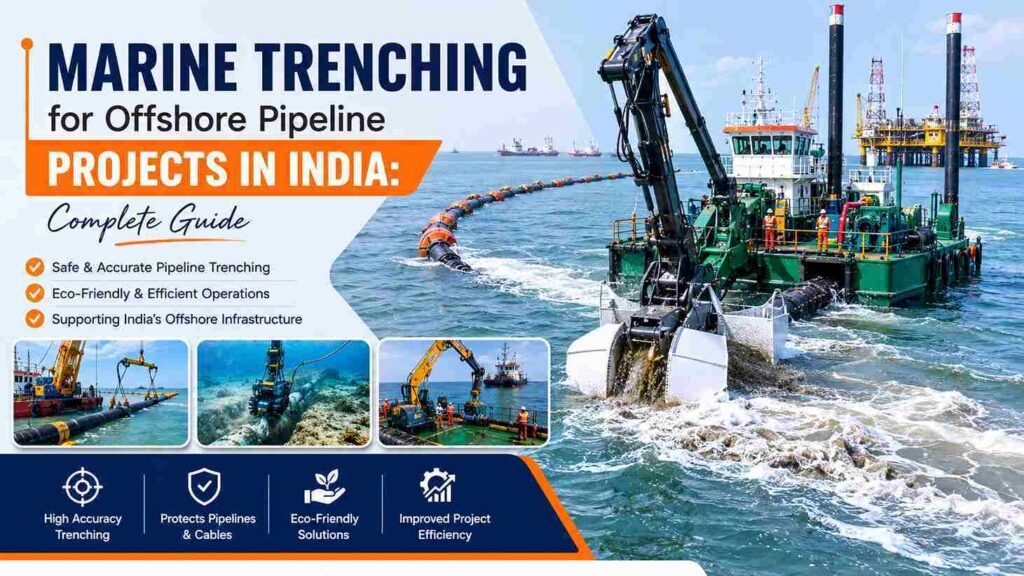
Marine Trenching for Offshore Pipeline Projects in India: Complete Guide
Summary
Marine trenching is one of the most important parts of offshore pipeline and subsea cable work. It protects buried infrastructure, improves stability in changing seabed conditions and helps offshore assets perform safely over the long term. Rock & Reef already positions itself around trenching, underwater cable and pipe laying and marine infrastructure, which makes this a strong topic for your website. Competitor and benchmark companies in the same sector, including Dredging Corporation of India, Knowledge Marine & Engineering Works, Van Oord and Boskalis, all treat trenching, pipeline installation and offshore protection as core marine capabilities. India’s port-led development plans and offshore wind push also keep this service area relevant.
Table of Contents
- What Marine Trenching Means in Offshore Work
- Why Marine Trenching Matters for Pipelines and Cables
- How an Offshore Trenching Project Is Planned
- Trenching Methods Used in Indian Coastal Conditions
- Equipment Commonly Used in Marine Trenching
- What Makes a Trenching Project Succeed or Fail
- What Competitor Websites Reveal About the Market
- How to Choose the Right Marine Trenching Contractor in India
- Final Thoughts
- FAQs
1. What Marine Trenching Means in Offshore Work
Marine trenching is the process of cutting or excavating a trench on the seabed so a pipeline or cable can be installed and protected. In Rock & Reef’s own content, trenching is described as underwater trenching for subsea cables, pipelines and offshore installations, and the company also presents underwater cable and pipe laying as part of its service mix. That alignment matters because it shows your brand is already speaking the same language as the market.
At the broader industry level, global marine contractors such as Van Oord and Boskalis describe trenching as part of offshore pipeline and cable installation work, including landfall construction, protection of pipelines and burial of subsea infrastructure. That is a useful signal for your blog strategy: trenching should be explained as engineering support for the full offshore installation cycle, not as a standalone digging activity.
2. Why Marine Trenching Matters for Pipelines and Cables
Offshore pipelines and cables sit in an environment that changes constantly because of currents, seabed movement, anchor interaction and general marine exposure. Trenching helps lower the risk of exposure and adds protection where the seabed is not stable enough to leave assets on the surface. That is why global offshore companies describe trenching as part of pipeline protection and subsea cable burial.
This is especially relevant in India because the national maritime plan emphasizes port modernization, port connectivity, port-led industrialization and coastal shipping, while the offshore wind policy framework and related strategy documents show growing offshore activity along India’s coastline. In other words, more marine infrastructure means more seabed preparation, more cable corridors and more pipeline protection work.
3. How an Offshore Trenching Project Is Planned
A good trenching job begins with surveys and route discipline. Rock & Reef’s own service and blog structure places hydrographic work, bathymetric understanding, seabed review and execution planning at the center of marine work. That is the right approach for offshore trenching because route choice, depth and seabed conditions decide both cost and risk.
For projects tied to offshore wind, the Ministry of New and Renewable Energy notes that the National Institute of Wind Energy is the nodal agency for resource assessment, surveys and studies in the EEZ, which reinforces how survey-led planning is built into offshore development in India. For port-side marine projects, the Ministry of Shipping’s dredging guidance and SOP discussion also shows that capital and maintenance work is expected to follow structured procedures.
4. Trenching Methods Used in Indian Coastal Conditions
Common subsea trenching systems include jet trenching, mechanical trenching and cable ploughing. Technical and equipment-vendor sources describe these as standard approaches for burying pipelines and subsea cables, while academic reviews note that ploughs, mechanical cutters and jetting sleds are conventional offshore trenching methods.
| Trenching method | Best suited for | Practical note |
| Jet trenching | Softer seabeds and cable burial | Useful when the seabed can be fluidised or cut with less resistance |
| Mechanical trenching | Harder or more variable seabeds | Better when precision and cutting force matter |
| Plough trenching | Continuous burial along long cable routes | Common where steady burial and quick coverage are important |
For Indian coastlines, the right method depends on seabed type, weather window, route length and how much protection the asset needs after installation. That is why experienced contractors do not sell trenching as one fixed method; they match the method to the route.
5. Equipment Commonly Used in Marine Trenching
Rock & Reef’s own pages already show that the company works with trenching services, backhoe capability and marine equipment built for precision work. That matters because trenching is often executed with a combination of excavation tools, survey support, and marine logistics rather than one machine alone.
Competitor websites show a similar pattern. KMEW highlights dredging, marine crafts, survey boats, service boats, tug boats, backhoe dredgers and cutter suction dredgers in its fleet materials, which is the sort of equipment depth clients like to see before awarding marine work. Global offshore players such as Boskalis and Van Oord also present trenching and offshore installation as integrated service lines backed by purpose-built fleets and technical teams.
6. What Makes a Trenching Project Succeed or Fail
The difference between a smooth project and a painful one usually comes down to preparation. The main variables are seabed condition, route accuracy, weather window, equipment fit and how well the contractor coordinates with the rest of the marine scope. That is why Rock & Reef’s blog structure around surveys, planning and equipment choice is a good fit for this topic.
India’s own dredging and port documents show that sediment behaviour, recurring dredging needs and port-side execution planning are not minor issues. Dredged material management also remains a live concern at major ports and that tells you how important it is to control seabed movement and burial depth in a marine project from the start.
7. What Competitor Websites Reveal About the Market
The clearest competitor lesson is that the strongest companies do not just list “Dredging” as a service. DCI separates maintenance dredging as a dedicated service and publishes active commitments at major ports, KMEW emphasizes its marine craft fleet and dredging capability and Van Oord and Boskalis present trenching as part of broader offshore installation, protection and cable-laying work.
That creates a useful direction for Rock & Reef content. Your website should keep doing three things well: explain the engineering, show the project use case and show the execution capability. Rock & Reef already has the right starting point with trenching pages, underwater cable and pipe laying services, marine trenching content and a brand narrative built around dredging, trenching and marine infrastructure.
8. How to Choose the Right Marine Trenching Contractor in India
The best contractor is the one that can show relevant project experience, the right fleet, survey capability and the discipline to work safely around a live offshore or port environment. That is the same logic Rock & Reef already uses in its own contractor-selection article: engineering experience, project planning, equipment availability and compliance are the real filters.
A practical selection checklist looks like this:
- similar offshore or port trenching work
- survey and seabed analysis capability
- the right excavation and burial equipment
- clear method statement and execution plan
- environmental and regulatory awareness
- proven ability to work within marine schedules
9. Final Thoughts
Marine trenching is not just an installation step. It is the part of the job that protects pipelines and subsea cables after they are laid and helps the entire offshore system perform the way it should. In India, the mix of port-led growth, coastal industrial work and offshore energy planning makes this a topic worth publishing now, not later.
For Rock & Reef, this blog fits naturally with the services and content already on the site. It also gives you a clean way to speak to EPC teams, port developers, power projects and offshore planners with the language they already use.
10. FAQs
- What is marine trenching in offshore projects?
Marine trenching is seabed excavation done to bury or protect offshore pipelines and subsea cables. It is part of the offshore installation and protection cycle used by marine contractors.
- Why is trenching important for subsea cables?
Trenching helps keep cables protected from seabed movement, anchors and other marine exposure. Technical offshore sources describe trenching and burial as standard ways to protect subsea assets.
- Which trenching methods are commonly used?
Jet trenching, mechanical trenching and plough trenching are commonly used, depending on seabed conditions and burial requirements.
- What should I check before hiring a trenching contractor?
Check project experience, fleet strength, survey capability, execution planning and environmental readiness. Rock & Reef’s own contractor guidance follows that same logic.
- Why is this topic relevant for India right now?
India’s port modernization plans, coastal industrial development and offshore wind policy activity all increase the need for offshore seabed preparation, cable burial and pipeline protection.
