
Blogs
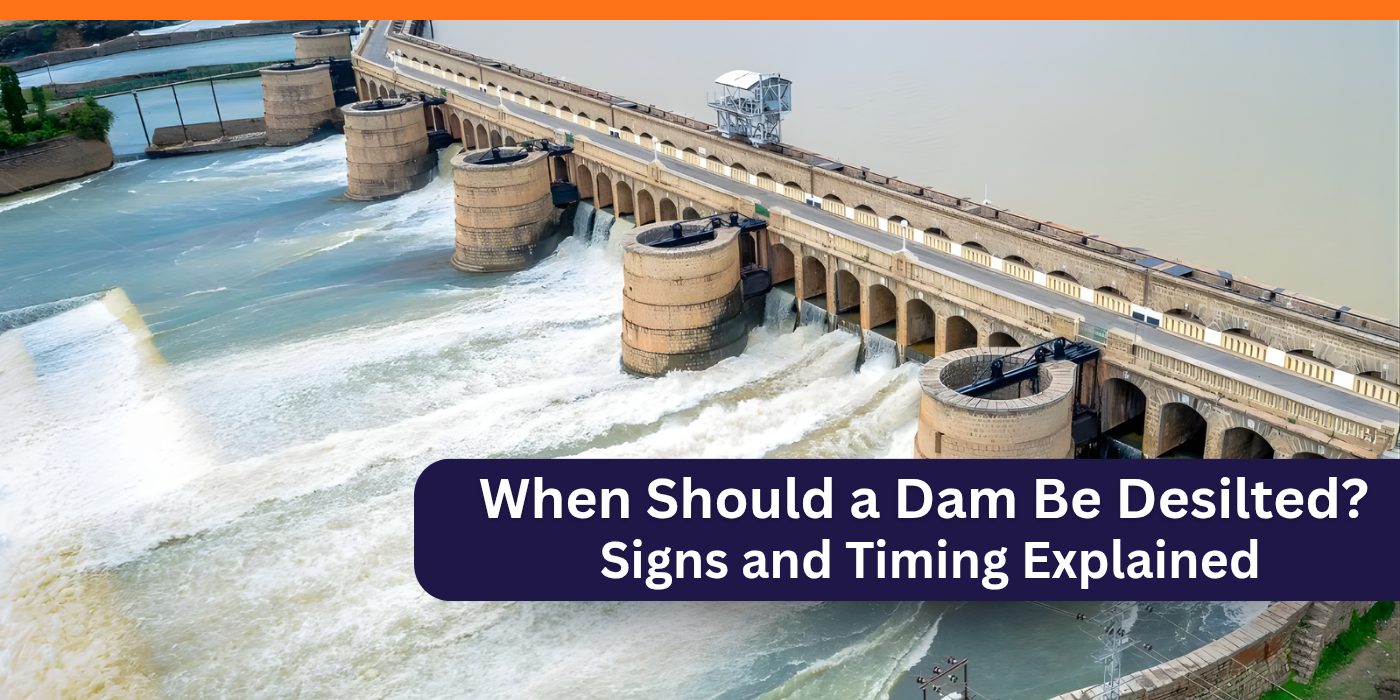
When Should a Dam Be Desilted? Signs and Timing Explained
Dredging plays a critical role in shaping maritime infrastructure, from deepening ports to restoring rivers and reclaiming land. Selecting the right dredger for the job is central to achieving precision, efficiency, and environmental compliance.
Here’s an overview of the ten most commonly used dredgers in the global market and how each fits into different operational needs, from capital dredging to routine maintenance.
1. Cutter Suction Dredger (CSD)
Overview:
Cutter Suction Dredgers are powerful, stationary vessels equipped with a rotating cutter head at the suction inlet. The cutter head loosens compacted soil, clay, or rock while the dredge pump transports the material through pipelines to a discharge site.
Best suited for:
- Capital dredging projects requiring deep cuts
- Hard seabed materials such as clay, compact sand, or soft rock
- Land reclamation and new port basins
Why it matters:
CSDs deliver precision and efficiency in challenging underwater conditions. Companies like Rock & Reef rely on these dredgers for large-scale port deepening and channel expansion works where accuracy and stability are critical.
2. Trailing Suction Hopper Dredger (TSHD)
Overview:
A self-propelled vessel fitted with trailing suction pipes and drag heads, the TSHD operates while sailing slowly along the dredging area. Sediments are collected in an onboard hopper, which can later discharge material offshore or pump it ashore.
Best suited for:
- Maintenance dredging of shipping channels and ports
- Large-scale reclamation and sand stockpiling
- Coastal nourishment projects
Why it matters:
The TSHD is the workhorse for maintenance dredging, ideal for projects demanding high mobility and minimal environmental disruption.
3. Backhoe Dredger (BHD)
Overview:
Mounted on a pontoon, this dredger uses a hydraulic excavator arm fitted with a bucket to dig and lift seabed material into barges.
Best suited for:
- Small harbours and confined areas
- Projects requiring precise excavation near quay walls or structures
- Removal of debris or hard material where maneuverability is essential
Why it matters:
Backhoe dredgers are favoured for their control and ability to handle varied materials, making them indispensable for river desiltation and harbour maintenance.
4. Grab (Clamshell) Dredger
Overview:
This dredger type uses a crane or hydraulic arm with a clamshell bucket to scoop sediments. It operates from a pontoon or barge and discharges material into nearby hoppers or barges.
Best suited for:
- Maintenance dredging in restricted zones
- Removal of isolated obstructions
- Urban waterfront or dock projects
Why it matters:
Grab dredgers are compact, quick to mobilize, and effective for precision work where environmental sensitivity is high.
5. Bucket Ladder Dredger (BLD)
Overview:
A traditional mechanical dredger equipped with a continuous chain of buckets that excavate material from the seabed and discharge it through chutes or conveyors.
Best suited for:
- Narrow canals and shallow rivers
- Projects demanding continuous excavation of cohesive materials
Why it matters:
Although less common today, bucket ladder dredgers still serve effectively in shallow or inland waterways where hydraulic dredging isn’t practical.
6. Jet Suction Dredger
Overview:
These use a jet of high-pressure water to loosen soft sediments, which are then pumped away through a suction pipe.
Best suited for:
- Fine sediments such as silt and sand
- Shallow rivers, lakes, and ponds desiltation
- Environmentally sensitive areas
Why it matters:
Jet suction dredgers provide a cost-effective and low-impact method for maintaining depth and restoring river flow capacity, especially useful in India’s monsoon-affected rivers.
7. Auger Dredger
Overview:
A specialized suction dredger featuring a horizontal auger head. The auger gently agitates material before suction, ensuring minimal turbidity and precise removal.
Best suited for:
- Environmental dredging (contaminated sediment removal)
- Shallow or confined waters
- Restoration projects demanding accuracy
Why it matters:
Auger dredgers are the preferred choice for eco-sensitive zones where water quality and sediment control are paramount.
8. Water Injection Dredger (WID)
Overview:
Instead of removing material, WIDs fluidize the seabed using low-pressure jets. The suspended material is carried away by natural currents or tides.
Best suited for:
- Maintenance dredging of soft materials
- Restoring navigation depth in silt-laden waterways
- Environmentally regulated areas where disposal is restricted
Why it matters:
Water injection dredgers minimize sediment disposal and environmental impact, aligning with sustainable dredging practices.
9. Plain Suction Dredger (PSD)
Overview:
The simplest hydraulic dredger design, featuring a suction pipe and pump system without a cutter or mechanical head. It relies on the natural erodibility of material.
Best suited for:
- Soft sediments and loose materials
- Lagoons, lakes, and reservoirs
- Small-scale desilting projects
Why it matters:
These dredgers are cost-efficient for smaller operations where material strength is low and precision excavation isn’t required.
10. Rock Dredger / Profile Dredger
Overview:
Heavy-duty dredgers are designed to excavate or fragment rock and compacted layers using mechanical or hydraulic tools (cutters, rippers, or underwater drills).
Best suited for:
- Capital dredging in hard seabeds
- Port expansion and offshore construction
- Deepening navigation channels
Why it matters:
These units deliver unmatched power and efficiency for infrastructure-heavy projects — a segment where Rock & Reef has established strong expertise across Indian ports and offshore developments.
Selecting the Right Dredger
Choosing the correct dredger involves evaluating:
- Material characteristics: soft silt vs. compact clay or rock
- Project scale: capital dredging vs. maintenance cycles
- Depth and reach: shallow inland channels vs. deep harbours
- Environmental sensitivity: turbidity, disposal, and regulatory clearances
- Mobility requirements: stationary vs. self-propelled vessels
A well-matched dredger ensures lower operational cost, better precision, and improved environmental compliance.
The Bottom Line
From deep-water capital projects to fine desiltation in rivers, each dredger type serves a distinct purpose. As India continues to expand its maritime and inland waterway infrastructure, modern dredging technology, coupled with experienced execution, will remain at the core of sustainable development.
Rock & Reef Dredging Pvt. Ltd. exemplifies this balance between technical capability and environmental stewardship, delivering dredging solutions that shape coastlines, restore waterways, and enable long-term navigational safety.
