
Blogs
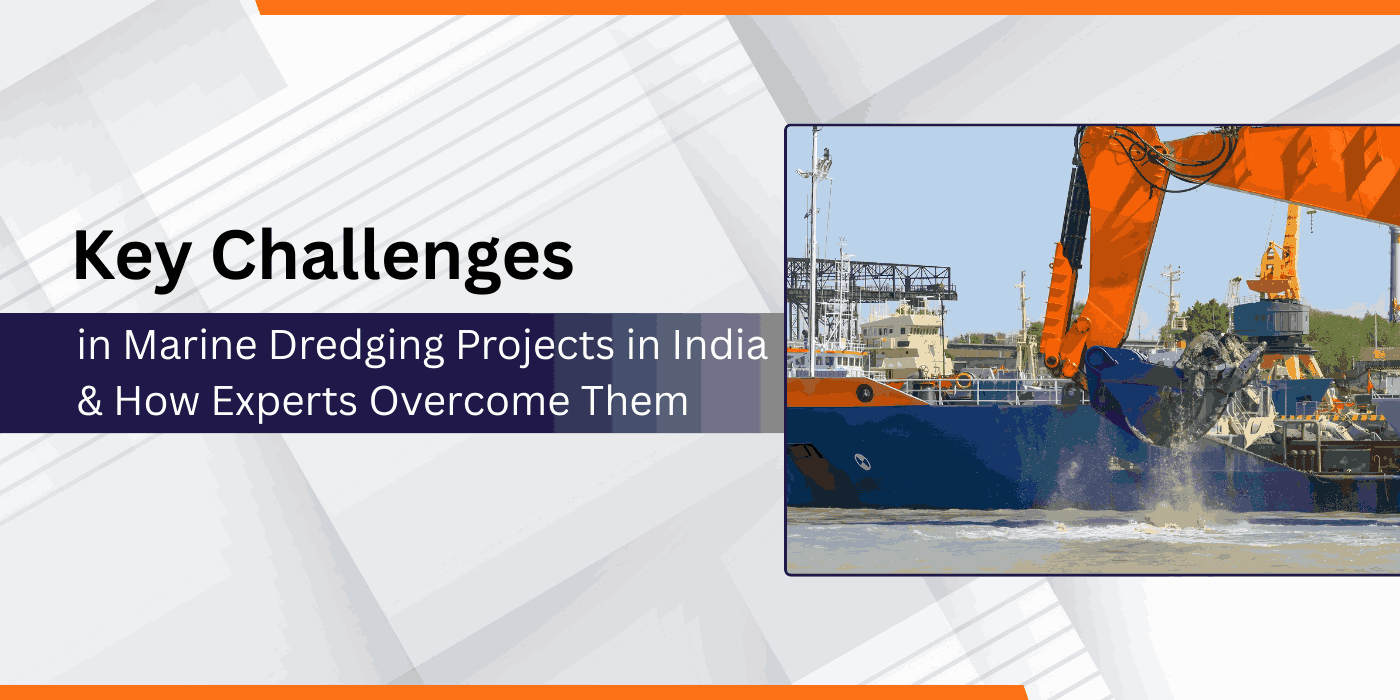
Key Challenges in Marine Dredging Projects in India and How Experts Overcome Them
Summary
Marine dredging projects in India operate in highly dynamic and regulated environments, influenced by complex seabed conditions, monsoons, heavy marine traffic, and strict environmental norms. This blog explains the key technical, operational, and regulatory challenges faced during marine dredging projects in India and how experienced dredging and marine engineering experts overcome them through proven methodologies, specialized equipment, and deep execution knowledge. It highlights why expertise-driven dredging solutions are essential for safe navigation, port efficiency, and long-term marine infrastructure performance.
Introduction
Marine dredging is a critical activity supporting India’s ports, harbours, rivers, coastal infrastructure, and industrial marine projects. From maintaining navigable waterways to enabling port expansion and offshore development, dredging plays a foundational role in the country’s maritime growth.
However, marine dredging in India is far from straightforward. Diverse coastal geology, unpredictable sediment behaviour, intense monsoon cycles, and regulatory requirements make dredging projects technically demanding. This is why marine dredging projects in India require expert execution, where experience, planning, and engineering precision define success.
As specialists in dredging and marine engineering, Rock and Reef Dredging Pvt. Ltd. approaches marine dredging as a complete engineering solution, addressing challenges through proven expertise and project-specific strategies.

Table of Contents
- Understanding the Nature of Marine Dredging in India
- Complex Seabed and Sediment Conditions
- Monsoon and Seasonal Weather Challenges
- Environmental and Regulatory Compliance
- Navigation and Marine Traffic Constraints
- Equipment Selection and Operational Limitations
- Sediment Disposal and Environmental Management
- How Experts Overcome Marine Dredging Challenges
- Why Proven Expertise Matters in Indian Marine Projects
- Conclusion
1. Understanding the Nature of Marine Dredging in India
India’s coastline stretches over thousands of kilometres and includes ports, estuaries, rivers, and offshore zones. Each region presents unique challenges such as:
- Rapid siltation in river mouths and ports
- Mixed seabed profiles including sand, clay, silt, and rock
- High tidal variations and strong coastal currents
Marine dredging in such environments requires more than equipment it requires engineering judgement and execution experience.
2. Complex Seabed and Sediment Conditions
One of the most common challenges in marine dredging projects is dealing with unpredictable seabed conditions. Indian waters often contain layered sediments that vary significantly across short distances.
| Seabed Challenge | Impact on Dredging |
| Mixed soil and rock layers | Reduced dredging productivity |
| Hard strata beneath soft soil | Equipment stress and delays |
| High silt content | Rapid re-sedimentation |
Experts overcome this by conducting detailed hydrographic surveys and adapting dredging methods to suit real-time seabed behaviour.
3. Monsoon and Seasonal Weather Challenges
Monsoons significantly affect marine dredging schedules in India. High waves, strong currents, and reduced visibility can disrupt operations and pose safety risks.
Experienced dredging contractors mitigate this by:
- Planning dredging windows around seasonal conditions
- Adjusting dredging intensity and sequencing
- Using stable marine platforms and support vessels
This proactive planning ensures continuity and safety despite adverse weather.
4. Environmental and Regulatory Compliance
Marine dredging projects are governed by strict environmental and coastal regulations. Challenges include:
- Approved dredging depths and boundaries
- Controlled sediment disposal
- Protection of marine ecosystems
Without expertise, regulatory non-compliance can halt projects. Experts integrate environmental management into dredging operations, ensuring compliance while maintaining productivity.
5. Navigation and Marine Traffic Constraints
Ports and coastal waterways remain operational even during dredging. Managing vessel movement alongside dredging equipment is a major challenge.
Expert dredging teams:
- Coordinate with port authorities
- Schedule dredging during low-traffic windows
- Deploy precision equipment in confined zones
This minimizes disruption while maintaining navigational safety.
6. Equipment Selection and Operational Limitations
Not all dredging equipment suits every marine condition. Selecting the wrong equipment can result in inefficiency or damage.

Experienced marine engineers match equipment to site conditions:
- Backhoe dredgers for confined and precise dredging
- Hopper barges for efficient sediment transport
- Support tugs for controlled marine movement
Here, dredging machines function as engineered solutions, not generic tools.
7. Sediment Disposal and Environmental Management
Handling dredged material responsibly is a major challenge. Improper disposal can lead to environmental damage and regulatory action.
Experts overcome this by:
- Identifying approved disposal sites
- Managing sediment transportation efficiently
- Preventing secondary siltation and contamination
This ensures dredging supports sustainable marine development.
8. How Experts Overcome Marine Dredging Challenges
Experienced dredging contractors apply a solution-driven approach that includes:
- Detailed project planning and surveys
- Adaptive dredging methodologies
- Skilled marine crews and engineers
- Continuous monitoring and quality control
This integrated execution model allows complex marine dredging projects to be completed safely and efficiently.
9. Why Proven Expertise Matters in Indian Marine Projects
Marine dredging in India is shaped by environmental variability, regulatory scrutiny, and operational complexity. Proven expertise ensures:
- Reduced project risk
- Higher operational efficiency
- Long-term performance of marine infrastructure
Experience enables contractors to anticipate challenges rather than react to failures.
10. Conclusion
Marine dredging projects in India demand technical excellence, planning precision, and hands-on execution experience. Challenges such as complex seabed conditions, monsoons, environmental regulations, and navigation constraints can only be managed through proven dredging expertise.
By treating dredging as a marine engineering solution, experienced specialists help ports, waterways, and coastal infrastructure operate safely and efficiently for the long term. This expertise-driven approach is what distinguishes reliable dredging partners in India’s evolving maritime landscape.
